
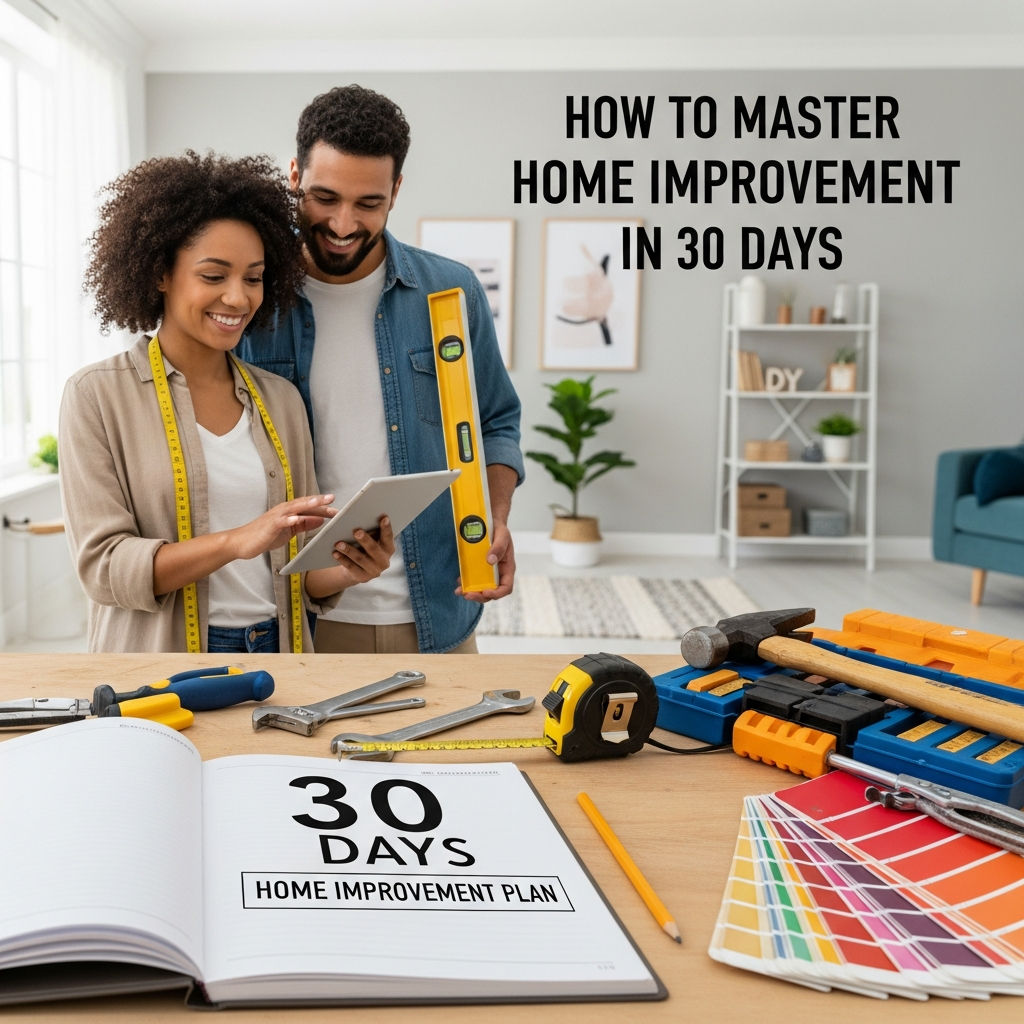
Master Home Improvement in 30 Days: The Ultimate DIY Transformation Guide
The idea of “home improvement” often conjures images of months-long construction projects, dust-covered furniture, and skyrocketing contractor bills. However, you don’t need a massive budget or a year of free time to transform your living space. By following a structured approach, you can master the essentials of home maintenance and aesthetic upgrades in just one month.
This 30-day guide is designed to take you from a DIY novice to a confident home improver. We will break down the process into four distinct weekly phases: Assessment and Essential Repairs, Aesthetic Upgrades, Efficiency and Systems, and Curb Appeal. Ready to increase your home’s value and comfort? Let’s get started.
Week 1: Foundations and the Essential Toolkit
Before you can beautify your home, you must ensure it is functional. The first week is dedicated to “triage”—identifying what is broken and building the skills (and the toolkit) necessary to fix it.
Building Your Master Toolkit
To master home improvement, you need the right tools. Skip the cheap “all-in-one” kits and invest in quality basics. Your 30-day journey requires:
- A 16-ounce claw hammer.
- A set of Phillips and flat-head screwdrivers.
- A cordless drill with a variety of bits.
- A 25-foot retractable measuring tape.
- A 9-inch torpedo level.
- An adjustable wrench and needle-nose pliers.
- A utility knife and a multi-tool.
The “Triage” Walkthrough
Spend Day 1 and 2 walking through every room. Create a “fix-it” list. Look for leaky faucets, loose cabinet hinges, running toilets, or cracks in the drywall. Mastering these small repairs gives you the confidence to tackle larger projects later in the month. By Day 7, your goal should be to have every “annoyance” repair completed. Learning to replace a washer in a faucet or using wood filler on a door frame are foundational skills that save thousands in professional fees over time.
Week 2: The Power of Aesthetics—Paint and Hardware
Once the home is functioning correctly, it’s time to focus on visual impact. Week two is where the most dramatic transformations happen, primarily through the two most cost-effective tools in home improvement: paint and hardware.
Mastering the Art of Painting
Painting is 80% preparation and 20% application. To master this skill in a week, focus on one high-impact room—usually the kitchen or the living room. Learn to:
- Prep the surface: Clean walls with TSP (trisodium phosphate) and use painter’s tape for crisp lines.
- Cut in: Use a high-quality angled brush to paint edges before using a roller.
- Choose the right finish: Understand that eggshell is great for living areas, while semi-gloss is essential for bathrooms and trim due to moisture resistance.
Updating Hardware and Fixtures
Hardware is the “jewelry” of your home. You can modernize a kitchen in a single afternoon by replacing dated brass handles with matte black or brushed nickel pulls. Similarly, replacing outdated light switches with modern rocker switches and dimmers can instantly elevate the mood of a room. These tasks teach you basic electrical safety (always turn off the breaker!) and the importance of precise measurements.
Week 3: Efficiency, Organization, and Systems
A master of home improvement doesn’t just care about how a house looks; they care about how it performs. Week three focuses on decluttering, storage solutions, and energy efficiency.
Smart Storage Solutions
Mastering home improvement involves maximizing the utility of your square footage. This week, install a closet organization system or add floating shelves in the laundry room. Learning to locate studs using a stud finder and using the correct wall anchors for different weights is a critical DIY skill. When everything has a place, the home feels larger and more expensive.
Energy Efficiency Upgrades
Lowering your utility bills is a form of home improvement that pays for itself. Spend the latter half of Week 3 on these tasks:
- Sealing leaks: Use caulk around window frames and weatherstripping under doors to prevent drafts.
- Thermostat installation: Replace your old manual thermostat with a smart, programmable version.
- Filter maintenance: Locate your HVAC intake and learn how to change filters—a simple task that extends the life of your furnace.
Week 4: Curb Appeal and Final Touches
In the final week, we move from the interior to the exterior. Curb appeal is vital for home value and provides that sense of pride every time you pull into the driveway.
The Front Door Makeover
The front door is the focal point of your home’s exterior. To master this area, consider a bold new paint color that complements your siding. Replace the old door handle with a smart lock or a high-quality deadbolt. Finish the look by installing new, modern house numbers and a clean welcome mat. This creates an immediate “wow” factor for guests and potential buyers.
Low-Maintenance Landscaping
You don’t need a green thumb to improve your yard. Mastery here involves “clean lines.”
- Define your garden beds with plastic or brick edging.
- Apply a fresh layer of dark mulch to suppress weeds and provide a professional finish.
- Power wash the driveway and walkways. Removing years of grime can make old concrete look brand new.
The Golden Rules of Home Improvement Mastery
As you complete your 30-day challenge, keep these three professional principles in mind to ensure your work stands the test of time:
1. Measure Twice, Cut Once
It’s an old cliché because it’s true. Accuracy is what separates a DIY disaster from a professional-grade improvement. Whether you are hanging curtains or laying tile, precision is your best friend.
2. Know When to Call a Professional
Mastery also means knowing your limits. While you can easily swap a light fixture or fix a leaky sink, you should generally leave major electrical panel work, structural wall removals, and complex gas line plumbing to licensed professionals. Working within your “zone of competence” prevents expensive mistakes and keeps you safe.
3. Invest in Quality Materials
While it is tempting to buy the cheapest materials to save money, the “master” approach is to buy the best you can afford. High-quality paint covers in fewer coats; high-grade lumber warps less; and premium hardware doesn’t tarnish. In the long run, quality materials save you time and labor.
Conclusion: Your New Life as a DIY Expert
By the end of these 30 days, your home will look better, function more efficiently, and likely be worth more than when you started. More importantly, you will have developed a “handyman’s mindset.” You will no longer see a loose floorboard or a dated room as a problem, but as a project you have the skills to solve.
Home improvement is a journey, not a destination. Even after this month is over, continue to build your skills, one project at a time. The confidence you’ve gained in these 30 days is the foundation for a lifetime of creating a space that truly feels like home.