
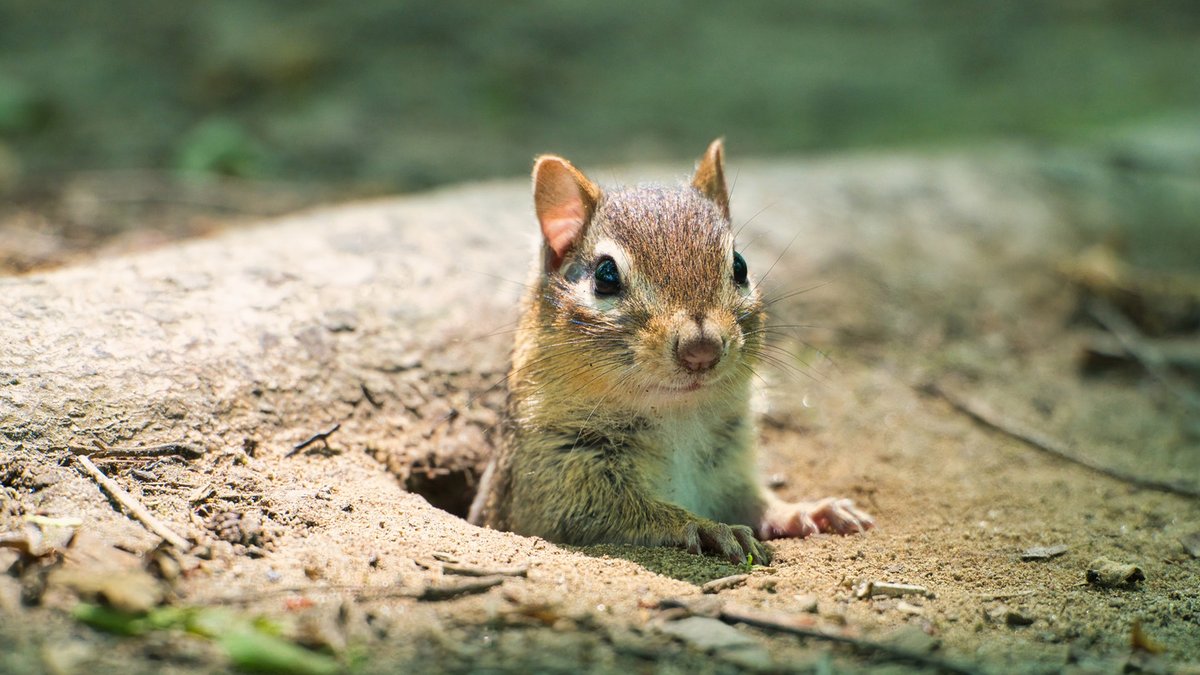
When chipmunks begin excavating burrows in lawns, their digging can become problematic. These small rodents construct detailed underground networks—often spanning 20 to 30 feet—using their claws and teeth. John Koprowski, Dean of the Haub School of Environmental and Natural Resources at the University of Wyoming, advises that the most reliable method involves persistently disrupting them until they relocate on their own.
Chipmunks mainly make their homes in underground burrows, but they may also utilize fallen logs, hollow trees, or openings near the ground. Although the underground tunnels can be quite long, their diameter never exceeds that of a ping pong ball. According to Prof. Koprowski, these burrows are typically located near tree roots or possibly under a driveway.
Getting Rid of Chipmunks
When you’re confident chipmunks are digging tunnels in your yard, Prof. Koprowski provided multiple methods for removing them. You could collapse their tunnels manually with a shovel or employ pungent repellents. Placing several moth balls deep into the burrow and then sealing the entrance frequently proves successful in persuading the chipmunk to vacate.
Read Also: Tips to Bloom Christmas Cactus in December
However, moth balls should not be used near pets or children because of their toxic nature. Prof. Koprowski also recommended using cayenne pepper sprays and pastes, or fragrant substances like menthol and camphor. You might need to try different approaches or apply them multiple times, as chipmunks react inconsistently to these remedies.
Preventative Measures
While manually disrupting a burrow or using a homemade chipmunk repellent are low-effort, inexpensive options, it’s preferable to implement a few preventive measures to stop chipmunks from burrowing in your yard initially. Prof. Koprowski stated that the most effective strategy is to cater to a chipmunk’s need for safety and security.
Chipmunks are afraid of predators, such as birds of prey and foxes, so keeping the areas around and within gardens open decreases the frequency and extent of visits and the damage they cause. Maintaining short grass, avoiding tall decorative plants that obstruct visibility, and using gravel borders instead of dense flowers are straightforward actions you can take.
Read Also: Artist Crafts Whimsical Bookcase from Upcycled Cardboard and Paper Clay
Maintaining an Open Yard
Trimming the lower branches of shrubs and bushes is another effective method to remove a chipmunk’s hiding place. Before collapsing burrows with a shovel, inspect your yard for other sheltered spots because that is precisely where your newly displaced chipmunks will relocate once they know they must move. Removing logs and rocks reduces cover, making chipmunks feel less secure.
It’s also wise to eliminate any readily available food sources, such as scattered bird seed or leftovers in your outdoor pet dishes. By adopting these preventive steps, you can deter chipmunks from burrowing in your yard and lessen the harm they might inflict on your lawn and garden.
In addition to the measures mentioned earlier, it’s also important to seal any holes or gaps in your yard’s fencing, as chipmunks can squeeze through tiny openings. By taking a wide-ranging approach to chipmunk control, you can protect your yard and garden from these pesky rodents.


