
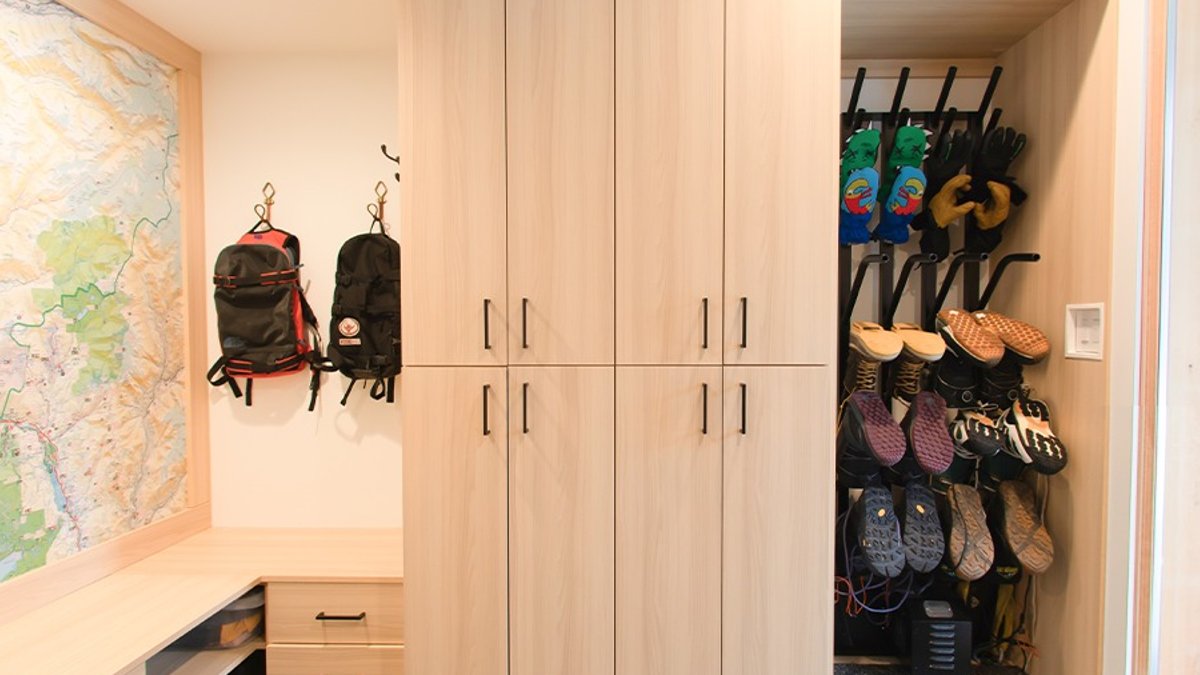
Wall-mounted boot storage systems are replacing traditional trays by addressing the core issue of moisture and dirt spreading onto floors. These designs eliminate the need for trays altogether, instead using pegs, rails, or hooks to hang boots upside down. This approach allows water to drain away from walking surfaces, solving the problem at its source. The methods vary widely, ranging from simple do-it-yourself solutions to custom-built cabinetry that combines storage with design.
Effective systems share three key features. First, boots are mounted with soles facing outward or angled toward a ledge, preventing water from pooling inside. Second, they keep boots completely off the floor, eliminating puddles and simplifying cleaning. Finally, many prioritize vertical space over horizontal sprawl, making them ideal for small entries or garages.
One innovative adaptation repurposes an antique saw stretcher—a wood-and-brass tool originally used to stretch canvas—as a boot holder. Mounted flat against the wall, its metal teeth grip the arches of heels or boots without damaging them. The result combines practicality with an artistic touch, transforming a functional space into one with character.
Related Post: Meraas Starts New Projects and Signs Nad Al Sheba Deal
A straightforward alternative uses a narrow vertical board with small ledges spaced evenly down its length. Boots sit heel-down on these ledges, creating a neat column instead of a scattered mess. This setup requires minimal materials, a scrap of wood and a few screws, and leaves the area beneath completely clear. Households with existing benches or hooks can incorporate this solution without major renovations.
Simple outdoor solutions for quick drying
Outdoor entries often benefit from even simpler solutions. A black-painted board with bent horseshoe hooks, drilled into a brick wall, serves as a no-frills drying station. Boots hang upside down, their soles exposed to air while water drips down the brickwork. The materials cost little, and installation takes only a drill and nails. This approach works equally well for back porches or covered garage entries.
Cowboy boots pose a unique challenge due to their stiff shafts. A dedicated rack clamps them between two horizontal rails at the top, securing them by the widest part of the shaft. This prevents them from flopping over or collapsing sideways in a closet. The design fits three pairs across a span of about 30 inches, making it compact for tight spaces while keeping boots stable and upright.
Budget-friendly projects can use a sheet of oriented strand board (OSB) and a row of bent nails to create a functional boot wall for under $20. Boots hang upside down, six pairs across, with any runoff falling directly onto a concrete floor that can be hosed down. This solution works well in garages, workshops, or any entry where mess is expected and cleanup is straightforward.
Related Post: Madrid Architect Transforms Tiny Flat into Open, Multi-Functional Home
Multi-use designs for small spaces
A dual-purpose shelf combines boot storage with additional mudroom essentials. Mounted at chest height, the shelf holds gloves, keys, or polish on top while wooden dowels underneath support upside-down boots. The entire unit bolts to a door or wall, saving floor space and keeping frequently used items within easy reach. Similar designs can be adapted for other small storage needs in a home.
For large families, a setup organizes boots by height using four rows of wire racks mounted vertically along a wall. The lowest row holds children’s boots, while the upper rows accommodate adult footwear. Each pair hangs upside down, shafts angled toward the floor to ensure water drains out rather than pooling. This design maximizes narrow wall space while keeping boots accessible and reducing the need to dig through a pile on the floor. A single strip of wall supports eight to ten pairs, making it ideal for households where multiple members track in dirt and moisture daily.
When aesthetics are a priority, a full mudroom wall integrates boot storage into the room’s structure. Above a bench or seating area, hooks hold coats, while a vertical column beside it features slots for boots to sit heel-down. The boots drip onto a wood divider rather than the walking surface, and their placement doesn’t obstruct movement. This built-in approach eliminates visual clutter while maintaining practicality.


