
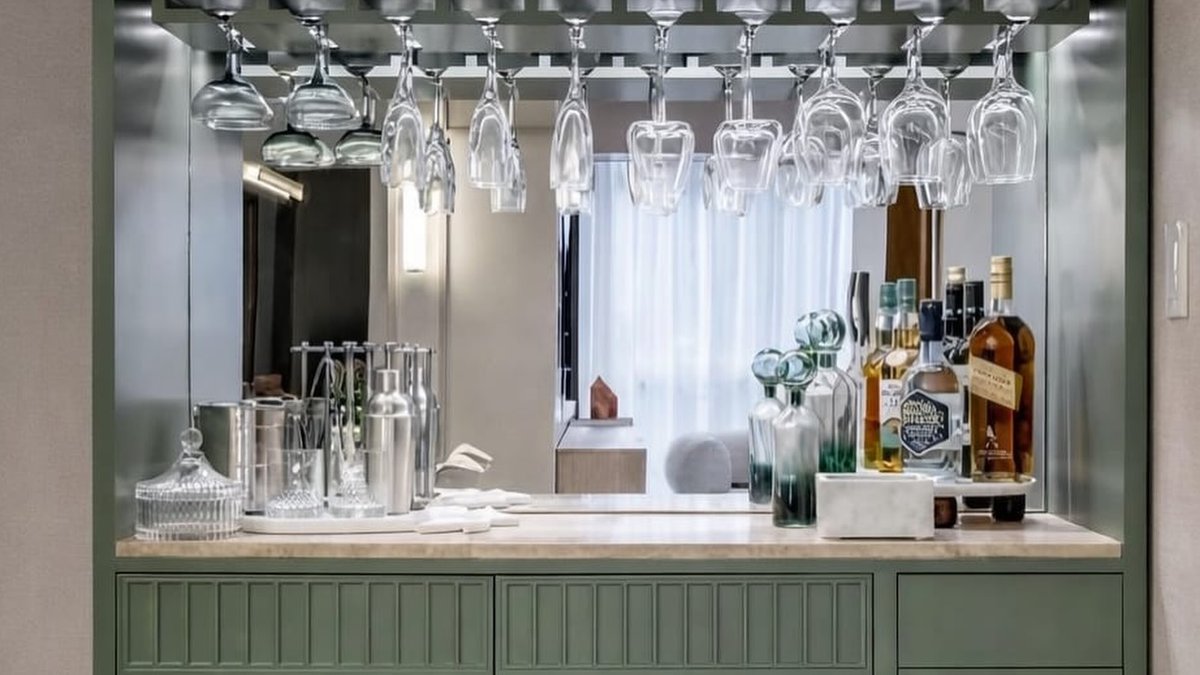
The black sideboard positioned in the corner of the dining room does more than store glasses and bottles; it supports the entire drink arrangement without wobbling. Unlike rolling bar carts that can shift unpredictably or tip when loaded, this piece of furniture serves both as storage and as a design element. Vertical ribs on its fluted front catch the late-afternoon light, casting geometric lines across the wall, and that visual detail means the tray of bottles on top does not have to carry all the decorative weight.
Rather than covering the surface with every decanter and shaker, the arrangement stays minimal: a single tray holds the bottles, a seasonal vase adds a splash of colour, and the remainder of the marble top remains open. Brass legs raise the unit off the floor, giving the impression of lightness in a compact space. The result is a drink station that stays firmly in place, looks intentional, and does not require constant rearranging.
Why Built-In Solutions Outperform Rolling Carts
Bar carts fulfill a purpose, yet they bring trade-offs. They occupy floor space when not in use, can topple if overloaded, and rarely accommodate enough glassware for more than two guests. The alternatives here, sideboards, repurposed dressers, or floating credenzas, eliminate those drawbacks completely. Each design emphasizes stability over mobility, turning a temporary need into a permanent fixture.
Some of these options, such as the reclaimed pine cabinet with iron hinges, serve double duty. Its centre wine lattice holds a dozen bottles while the shelf above displays Glencairn glasses. Side cabinets tuck away extras, so the top stays clear for pouring. Placed along a dining-room wall, it lets guests serve themselves without crowding the table.
Others, like the tall arched cabinet, create the impression of a built-in bar without any drywall work. The upper half houses an open wine cubby, stemware racks, and a shelf for tools, while rattan doors conceal items meant to stay hidden. Light oak prevents the piece from overwhelming a cream-coloured wall, balancing height with proportion.
A Furniture Piece That Disappears When Needed
The floating marble credenza offers another answer for tight areas. Mounted directly to the wall, it removes legs or wheels entirely. The fluted detail along the front adds visual interest without consuming extra room. Bottles and Murano glass vases sit on the marble top, and the lack of floor contact makes the dining area feel larger.


