
Workplace colour schemes were once largely driven by aesthetics and brand identity. Today, they are increasingly shaped by a broader set of priorities, including employee wellbeing, workplace experience and sustainability. As organisations rethink what employees need from the office, colour is becoming a strategic design tool rather than simply a decorative finish.
As organisations continue to adapt to hybrid working, the office must offer something employees cannot replicate elsewhere. This has placed greater emphasis on creating spaces that feel welcoming, comfortable and engaging, helping to make time spent in the workplace both productive and worthwhile.
Employees increasingly judge the workplace against the wider environments that they experience every day, whether that’s home, hospitality venues or shared social spaces. This has accelerated demand for softer, more residential-inspired colour schemes that help support a greater sense of comfort and belonging.
Related: The hidden power of everyday design
Tailoring schemes to the space
One of the most notable trends is the move towards more purposeful colour specification. Rather than applying a single palette across an entire workplace, designers are tailoring colour schemes to the specific function of different spaces. Collaborative areas often benefit from more uplifting tones that encourage interaction and creativity, while spaces designed for focused work typically call for calmer, softer shades that help reduce distractions and support concentration.
This approach recognises that today’s modern workplace serves multiple functions across the building and throughout the working week – from collaboration and social interaction to focused individual working. The most successful schemes recognise that there is no single colour solution for every environment. Instead, colour is being used to create experiences that feel appropriate to both the space, its intended use and its users.
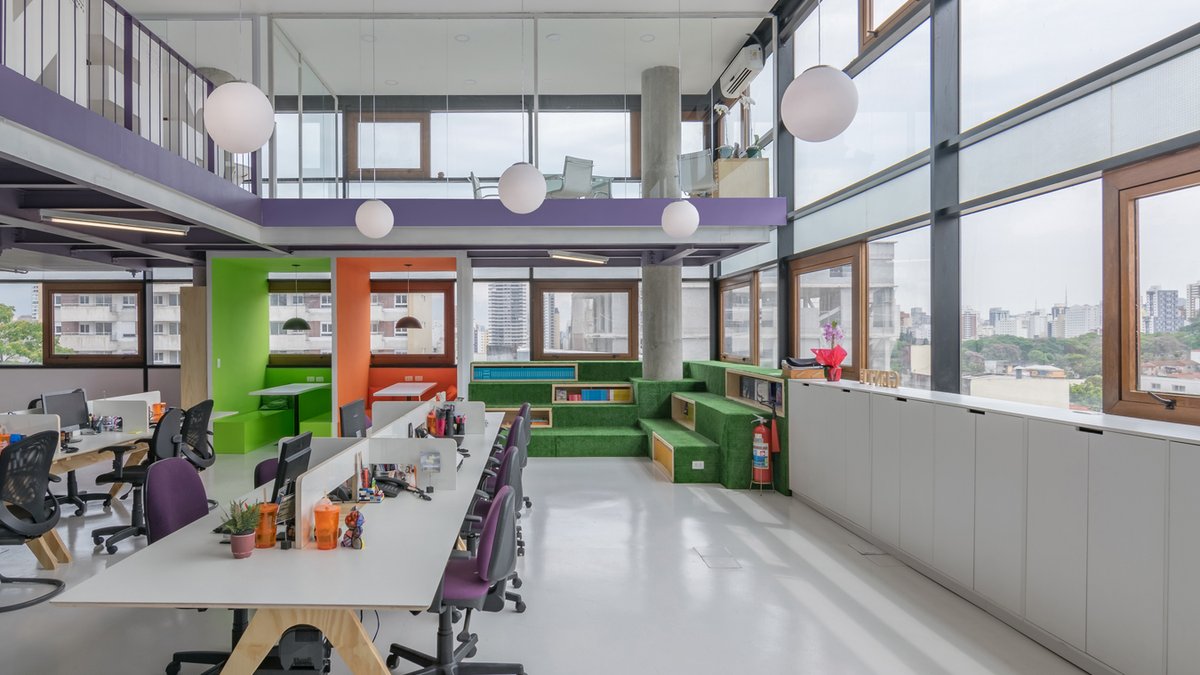
Editora Gente office in São Paulo, Brazil, by Studio dLux, is a good example of how colour can break up spaces and influence mood.
Related: Singaporean furniture brand Cellini marks 40 years
Alongside this shift, frameworks such as WELL and BREEAM are encouraging a more holistic approach to the built environment, with specifiers and designers considering how design and product choices are influencing health, comfort and overall user experience. As a result, colour is increasingly being evaluated not just on its visual appeal but as part of a wider strategy for delivering healthier and more effective workplaces.
Colour has always influenced how a space looks, but its role is increasingly extending far beyond aesthetics. As workplace design evolves to prioritise wellbeing, flexibility and employee experience, colour is becoming a valuable tool for shaping behaviour, supporting performance and creating environments where people can thrive. The organisations that recognise this shift will be best placed to create workplaces that meet the expectations of both today’s workforce and of tomorrow’s.


