
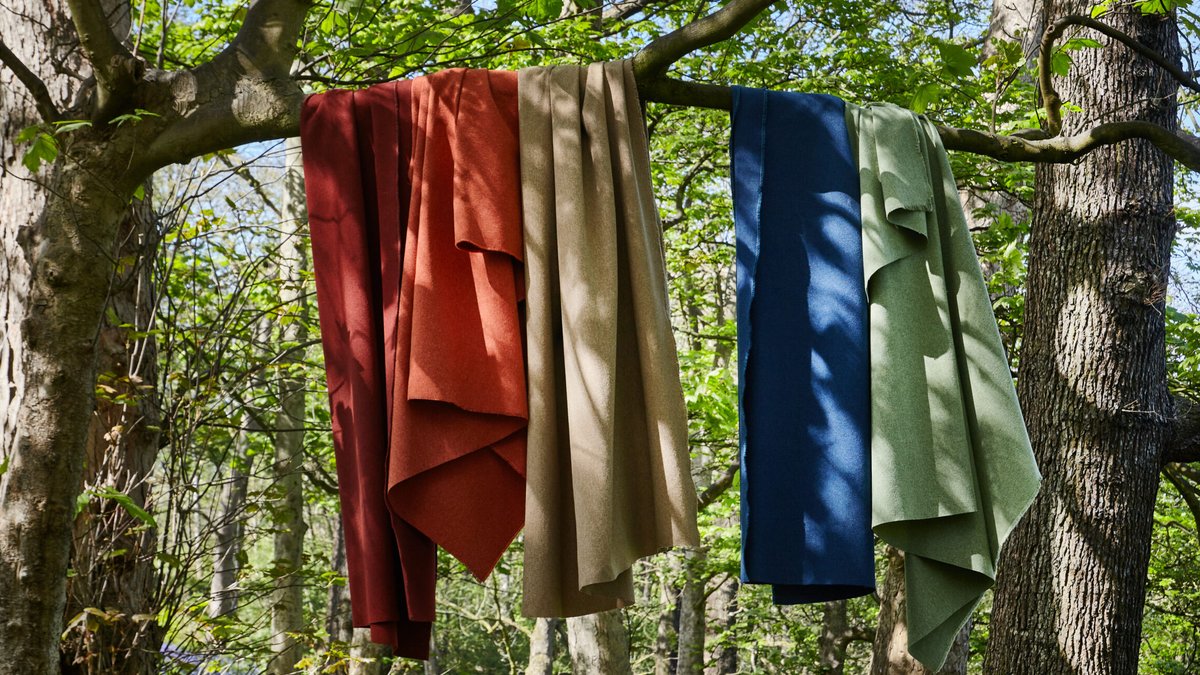
Camira’s newest upholstery fabric, Upland, is positioned as a versatile option for commercial interiors, blending a synthetic build with a wool‑inspired look.
Design roots and material strategy
Founded over five decades ago in Yorkshire, England, the company has cultivated a reputation for fabrics that marry visual appeal with durability. Upland follows that lineage, drawing visual cues from the rolling countryside surrounding its headquarters. The texture and tone echo the region’s natural palette, offering subtle warmth for modern workspaces.
At the core of the product is a mono‑material construction. By using a single type of polymer throughout, the fabric is recyclable, aligning with a broader industry push toward more responsible material choices. This design also simplifies end‑of‑life processing, which could reduce waste compared with multi‑layer textiles.
Related: Actiu launches new table system TRAYY
Performance features for high‑traffic settings
Upland is described as bleach‑cleanable and moisture‑resistant, traits that make it suitable for environments where hygiene and upkeep are priorities. The robust build is meant to endure the demands of task seating, collaborative areas, hospitality settings, and informal breakout zones. Air‑texturised yarns create a lofty, wool‑like hand feel while maintaining the resilience needed for daily use.
The colour‑rich appearance stems from a water‑free colouration method. Pigments are introduced during yarn formation rather than through traditional piece or package dyeing, which reportedly cuts water consumption. The process yields a collection of 40 colourways, ranging from grounding greys and evolving neutrals to richer shades such as aubergine, burnt orange, deep red, and saturated teal. Multiple dyed yarns produce subtle movement and depth, allowing tones to shift with changes in light and viewing angle.
Designers can pair Upland with other Camira collections, facilitating coordinated schemes across varied furniture types. This compatibility aims to simplify specification for projects that involve multiple seating solutions.
Related: Singapore’s HDB flats shape urban living
From a practical standpoint, the substantial construction promises longevity, reducing the need for frequent replacement in commercial settings. Its blend of softness, resilience, and visual texture lets specifiers use a single material across task chairs, lounge seating, booths, pods, and bar stools without compromising aesthetic consistency.
Upland reflects an ongoing shift toward textiles that must satisfy both design expectations and sustainability metrics. As companies seek materials that can be recycled and produced with lower environmental impact, fabrics like this could become more common in specifications, especially for organizations with green procurement policies.
For further technical details, Camira’s documentation can be consulted, and industry standards on textile recyclability are outlined on polyester recycling.


